Quiet Cycle
Interaction Designer
Visual Designer
User Researcher
Role
Skills
Figma
Digital Ethnography
Surveys
AI Collaboration
Timeframe
Industry
One Month
Digital Health
Most health apps ask people with endometriosis to trade privacy for insight. Quiet Cycle asks whether that trade is necessary at all.
What if understanding your health did not require giving up your privacy?
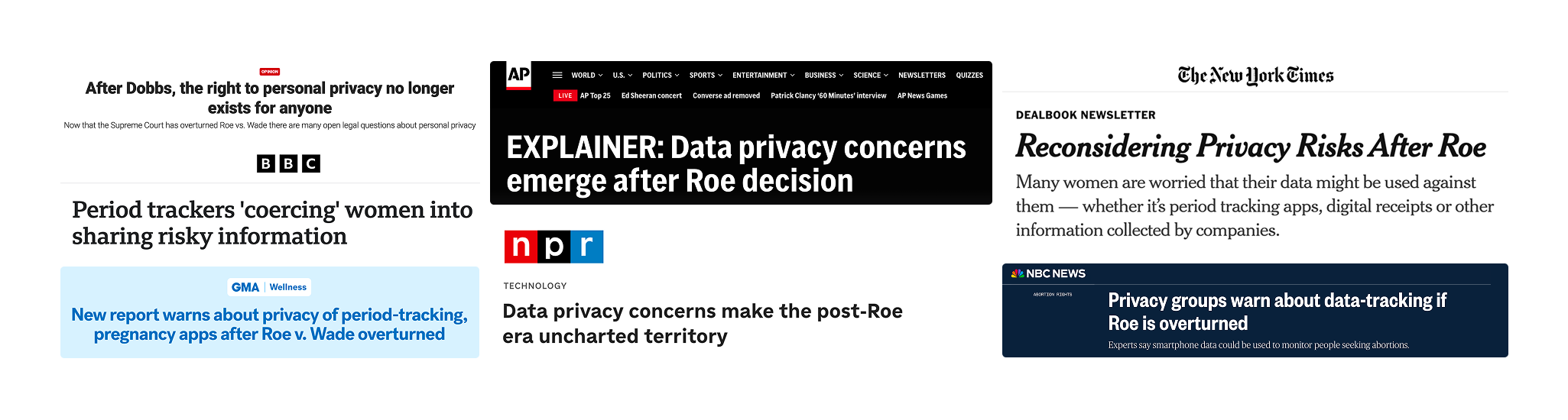
Privacy Concerns in the Post-Roe Era
Endometriosis affects over 10% of menstruating people worldwide, yet diagnosis is often delayed by years due to stigma, inconsistent care, and the difficulty of articulating symptoms over time. While symptom tracking is critical for diagnosis and treatment, most digital health tools collect, store, and centralize reproductive data, creating fear and distrust, particularly following the overturning of Roe v. Wade.
Based on Market Analysis
existing health apps each solve part of the problem.
Apple Health makes health data connected.
Flo makes reproductive health approachable.
QENDO makes tracking condition specific.
Clue makes tracking data driven.
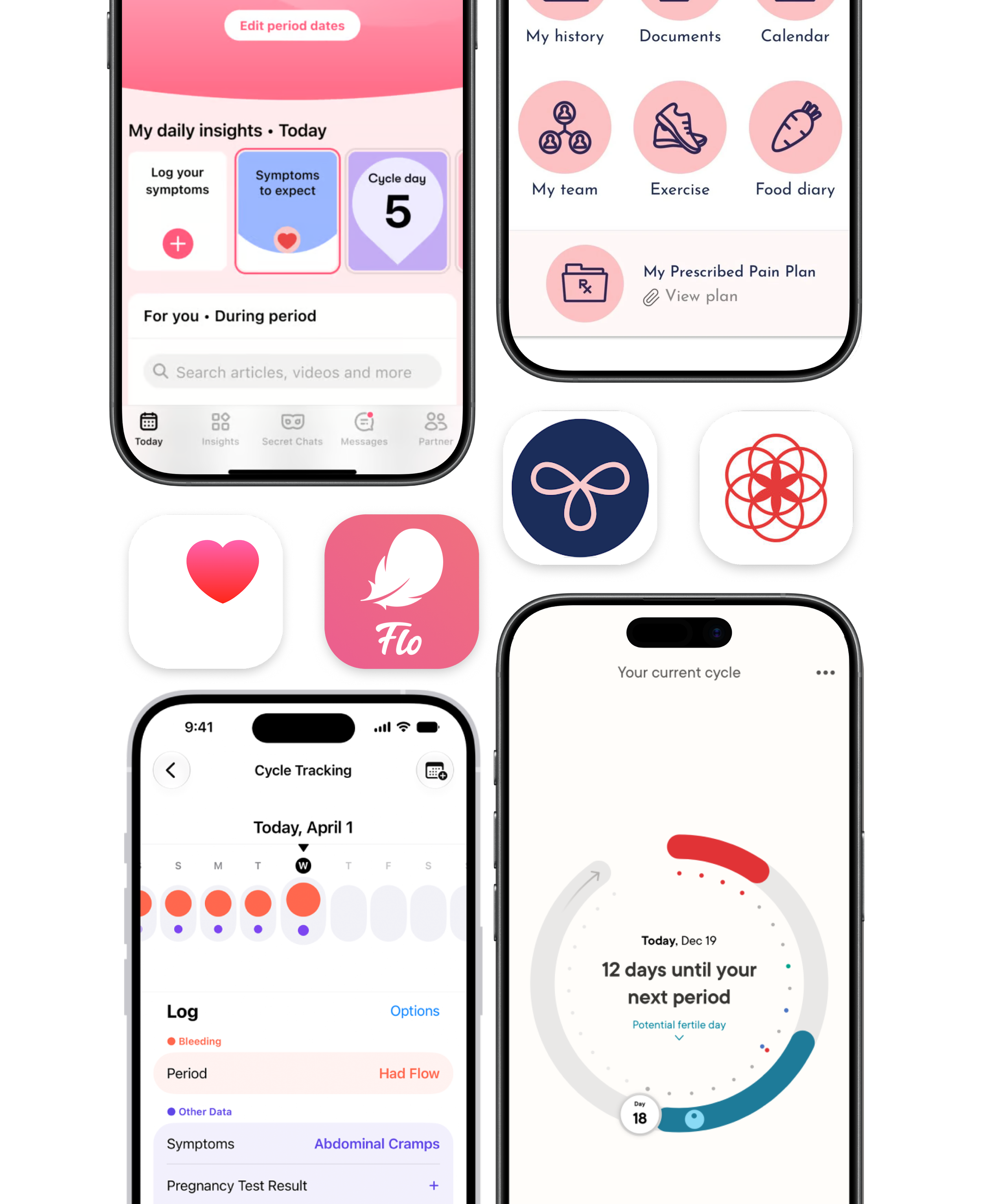
The opportunity was not another period tracker. It was a private health companion built around endometriosis.
Listening to the Endometriosis Community
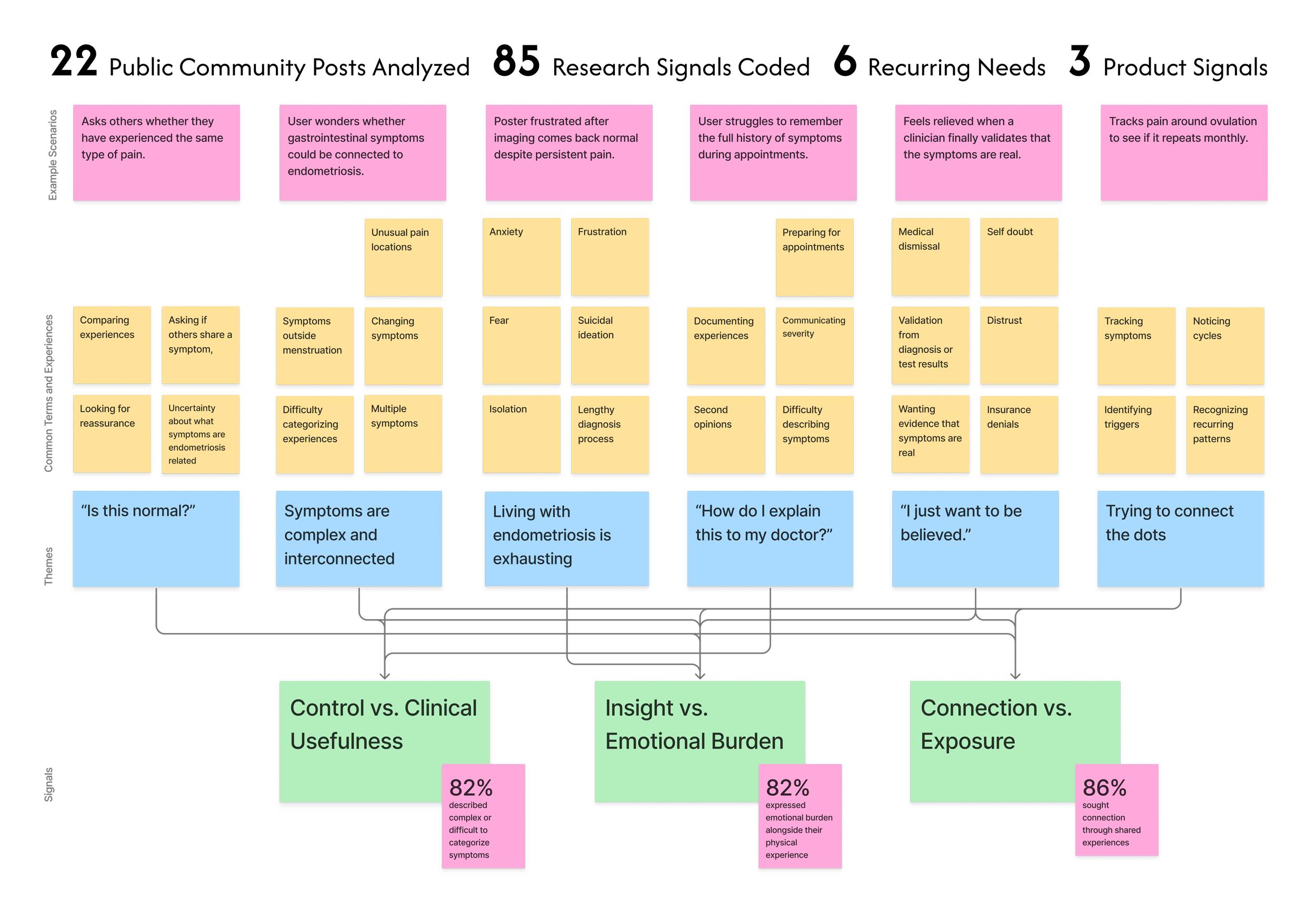
Alongside privacy concerns, social listening revealed a more complex set of needs around understanding symptoms, communicating experiences, and finding support.
*In accordance with community guidelines, we did not recruit, survey, message, or interact with community members at this stage of the progress; this analysis is limited to observing publicly available discourse. All quotes referenced in synthesis were anonymized and stripped of identifying detail before being used in affinity mapping, consistent with the same privacy principles the product itself was designed around.
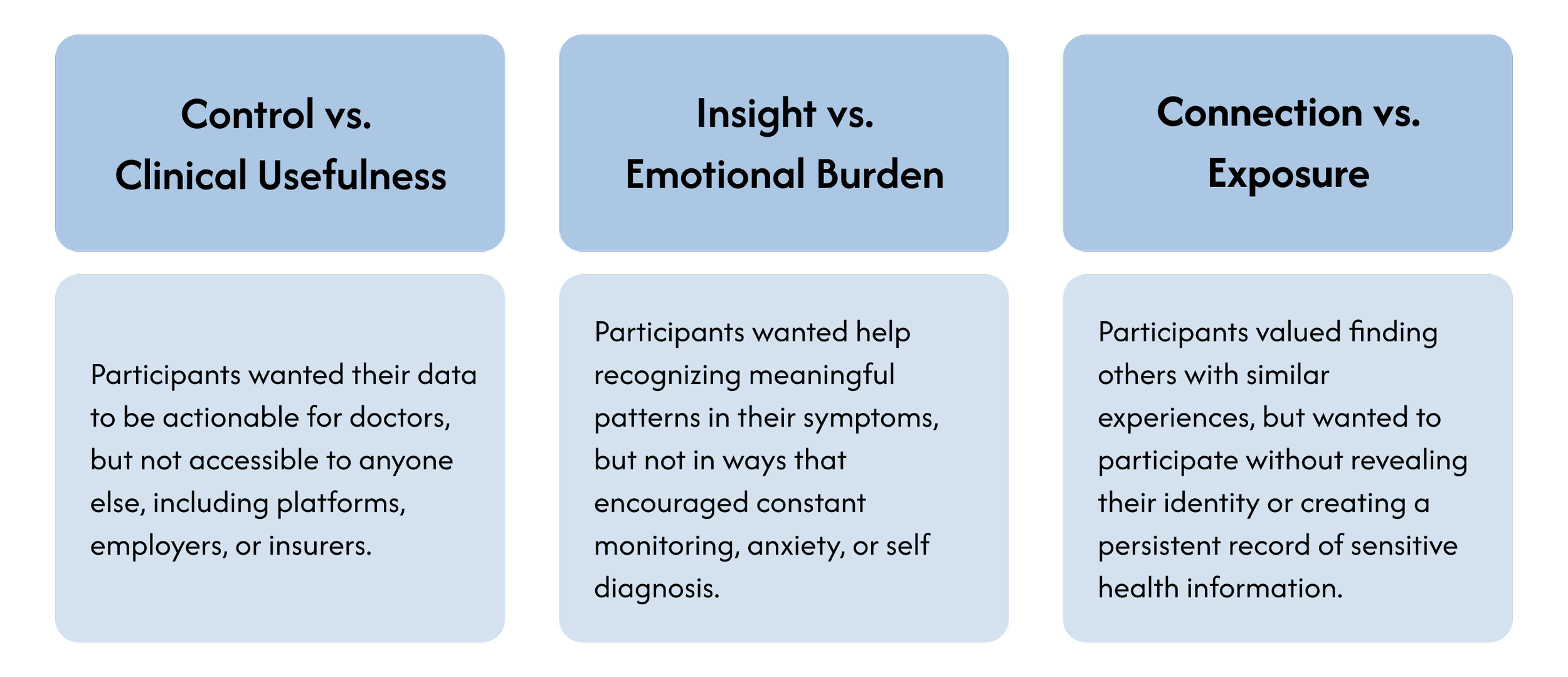
From Signal to System
Across the four archetypes, three tensions kept surfacing regardless of which group a participant belonged to:
Turning Research To System Requirements
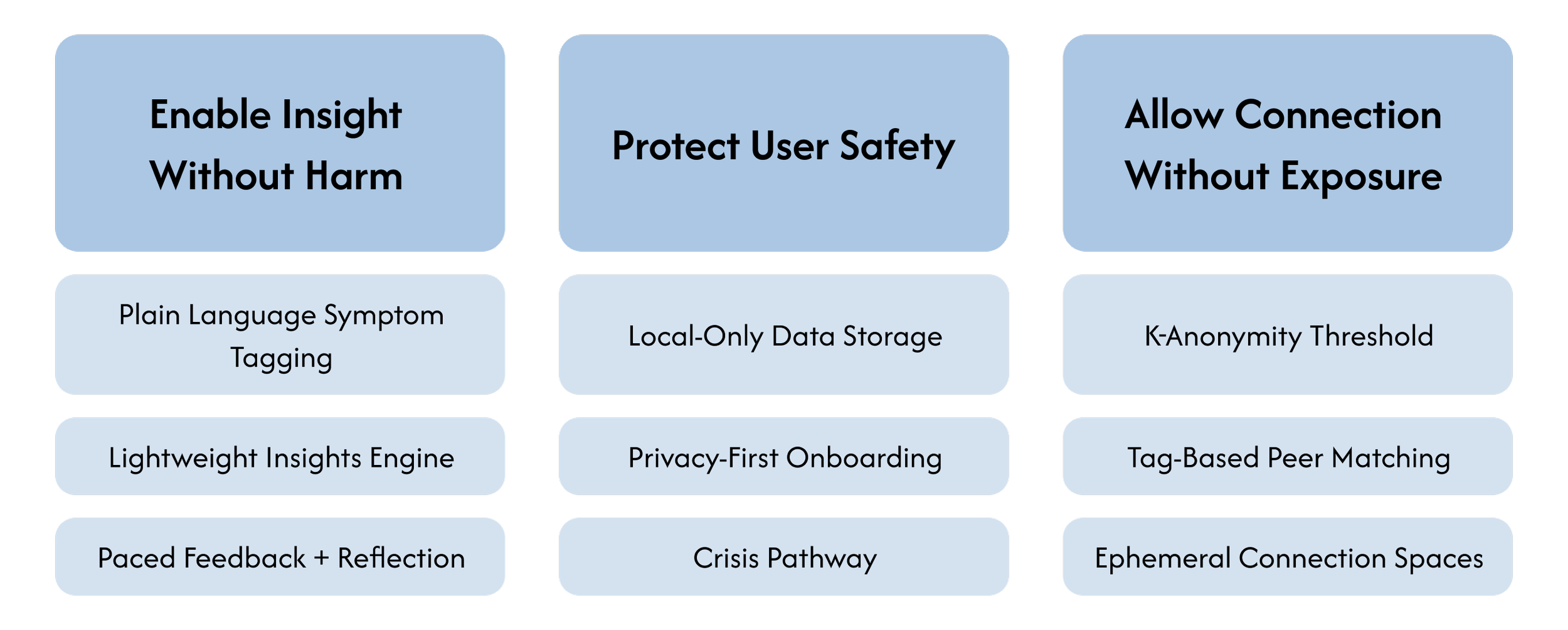
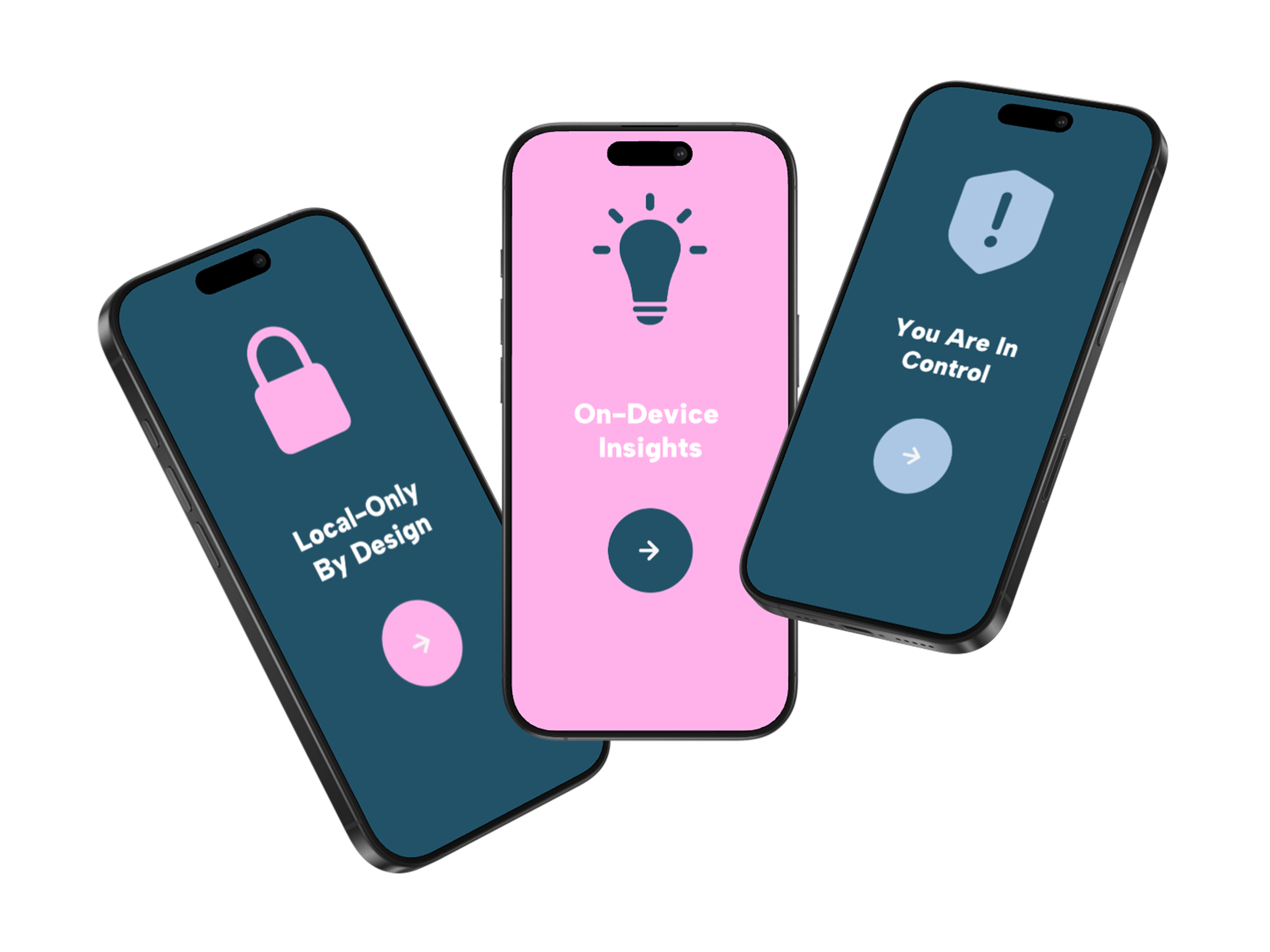
Research insights were translated into three principles that shaped how Quiet Cycle handles health data, pattern recognition, and peer connection.
Privacy and safety became part of the architecture, not features added afterward.
From Research to Prototype
With the system requirements established, I explored how AI could accelerate prototyping without determining the product itself. Research, synthesis, information architecture, and feature decisions were completed first, giving me a clear foundation for what Quiet Cycle needed to do and why.
AI entered the process as a tool for translating those decisions into a functional experience quickly, allowing more of the project timeline to be spent evaluating interactions and developing a visual language appropriate for sensitive health experiences.

Translating Decisions Into a Buildable Specification
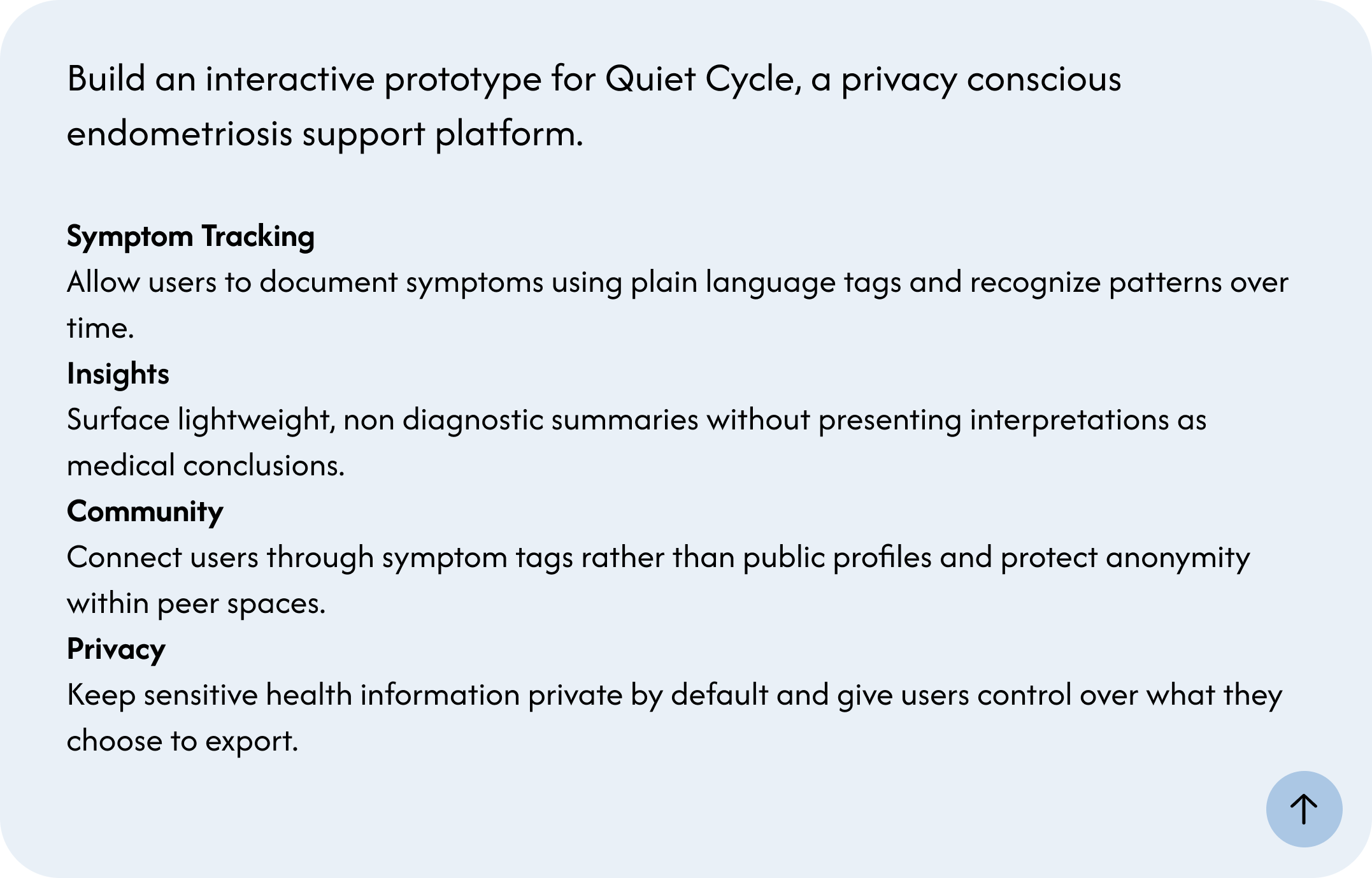
Before moving into Claude, I used ChatGPT to translate established product decisions into a structured specification for the prototype. I provided the information architecture, feature requirements, privacy constraints, and intended interactions, then used ChatGPT to organize those decisions into detailed instructions that could be implemented consistently.
The resulting specification defined how symptom tracking, insights, peer connection, privacy, and data control should behave before any interface was generated.
Building the Functional Baseline
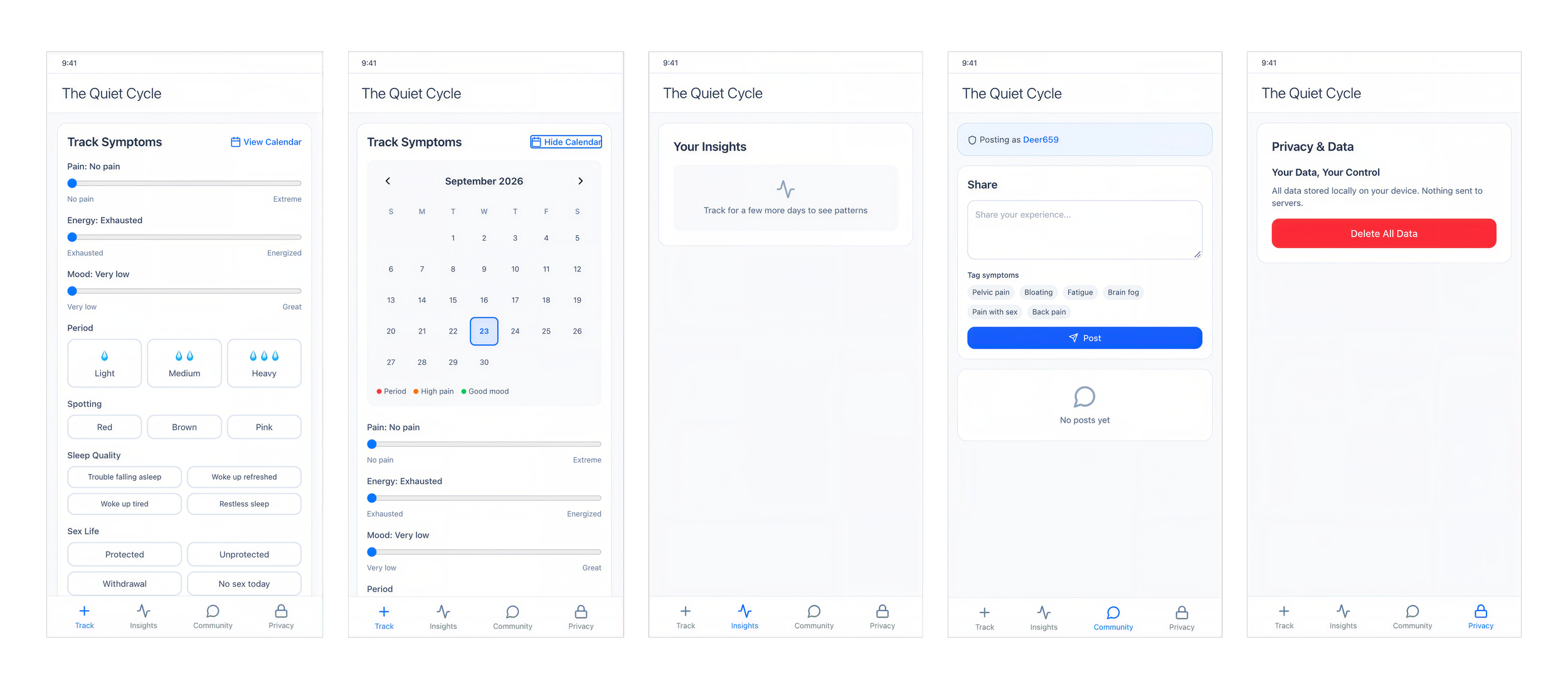
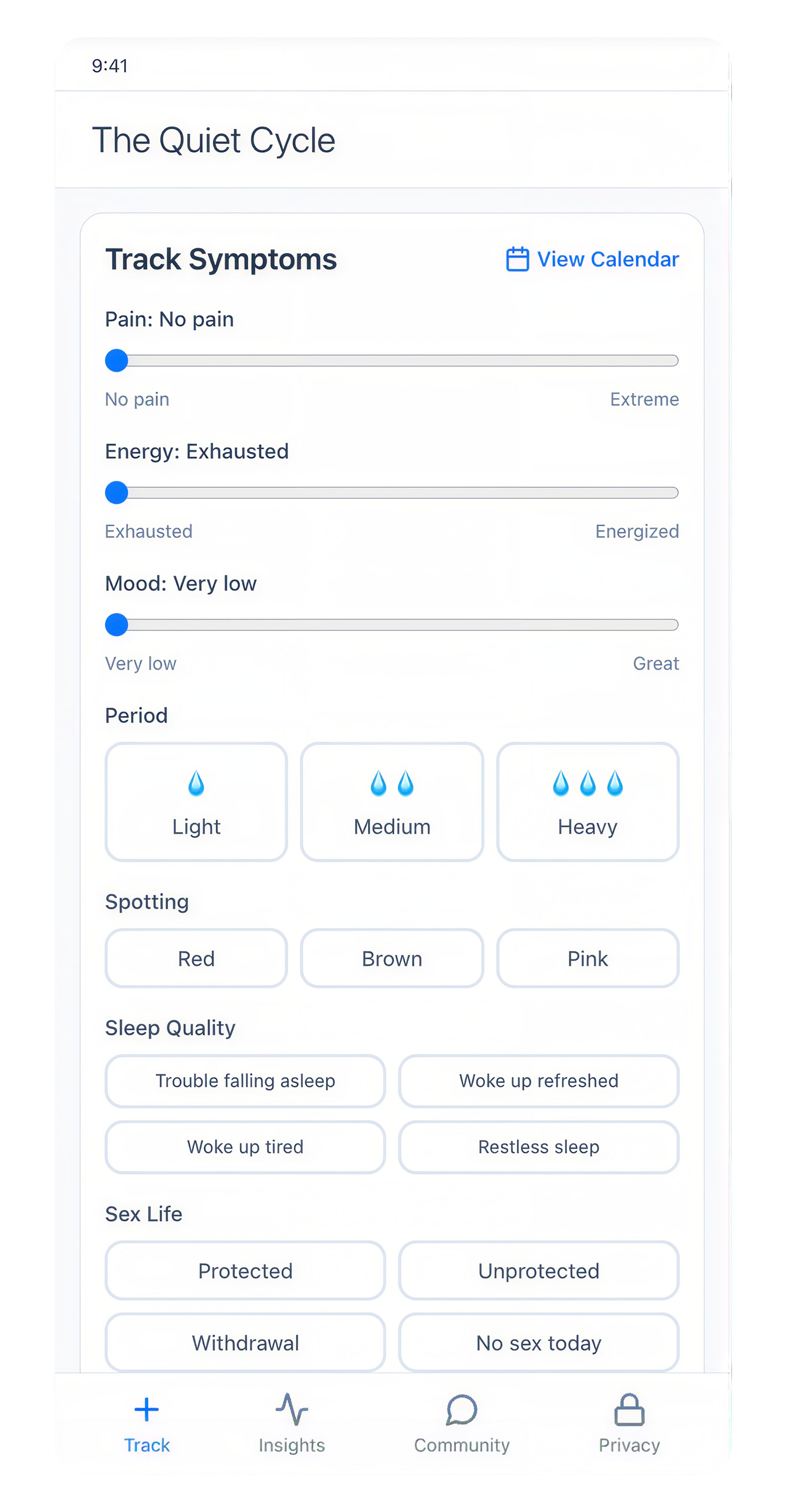
I brought the structured specification into Claude to rapidly develop an interactive proof of concept. The resulting prototype established Quiet Cycle’s core navigation, tracking interactions, community experience, and privacy functionality, allowing me to evaluate how the system worked as a connected product rather than as isolated wireframes.
At this stage, the goal was functionality rather than visual polish. Claude served as a development partner, translating established UX decisions into something I could interact with, evaluate, and refine.
From Functional to Thoughtful
The AI generated prototype validated Quiet Cycle’s core functionality, but the resulting interface felt clinical and impersonal. While the necessary interactions were there, the visual language did little to distinguish Quiet Cycle from traditional health tracking platforms or create a sense of comfort around documenting sensitive experiences.
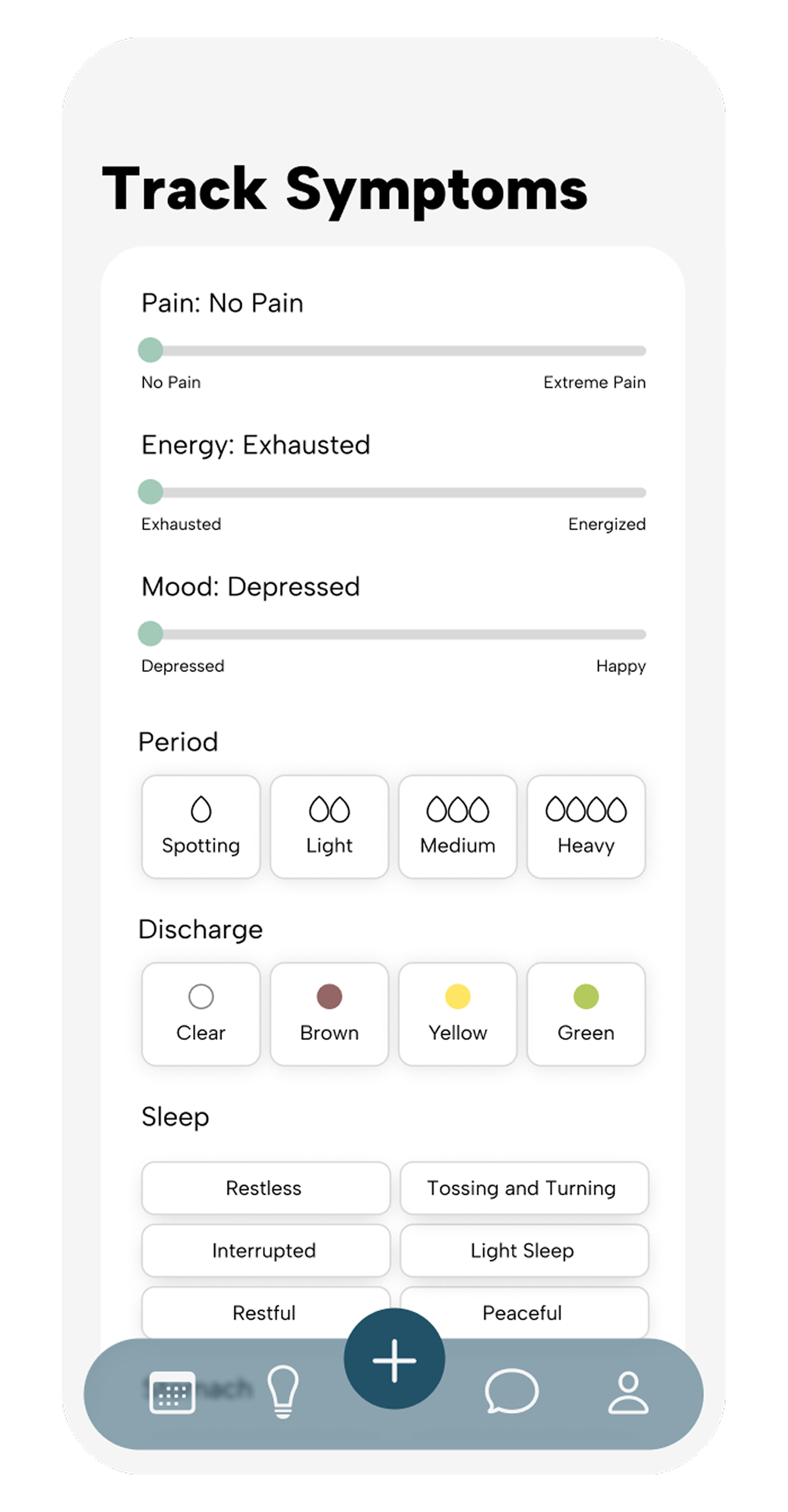
I used the prototype as a functional foundation, then rebuilt the experience in Figma. Color, typography, hierarchy, and interface components became tools for communicating warmth, privacy, and trust while maintaining the clarity needed to document complex symptoms.
The Final Experience
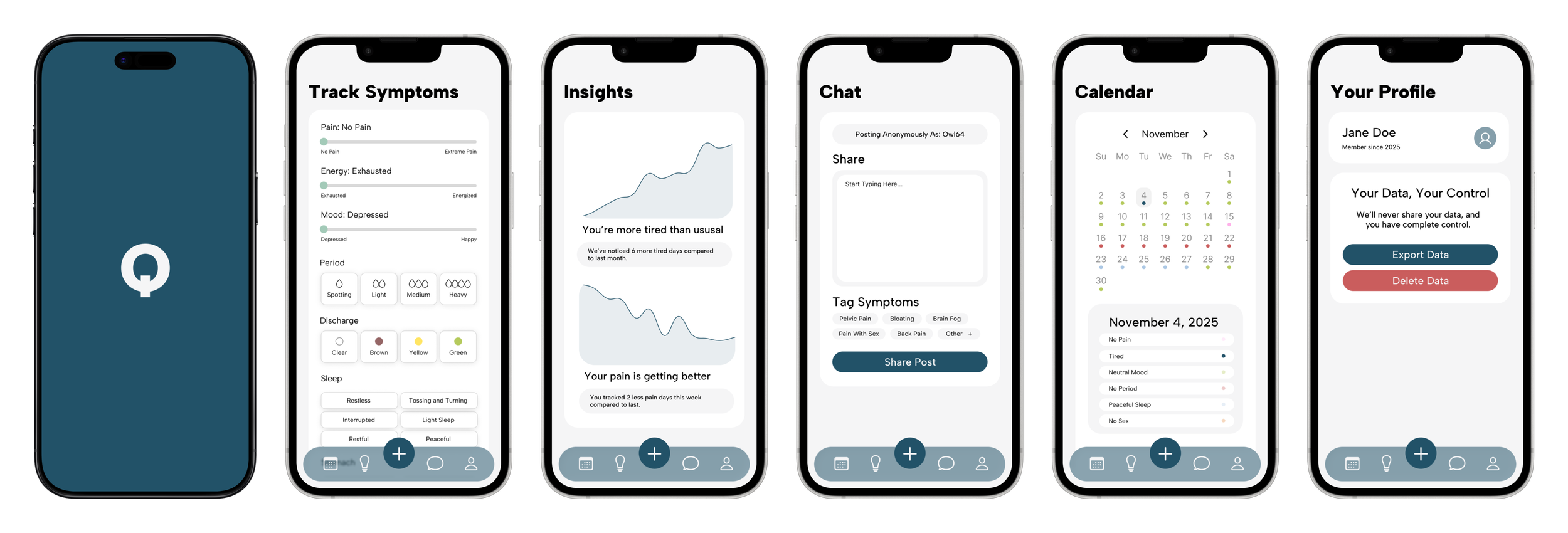
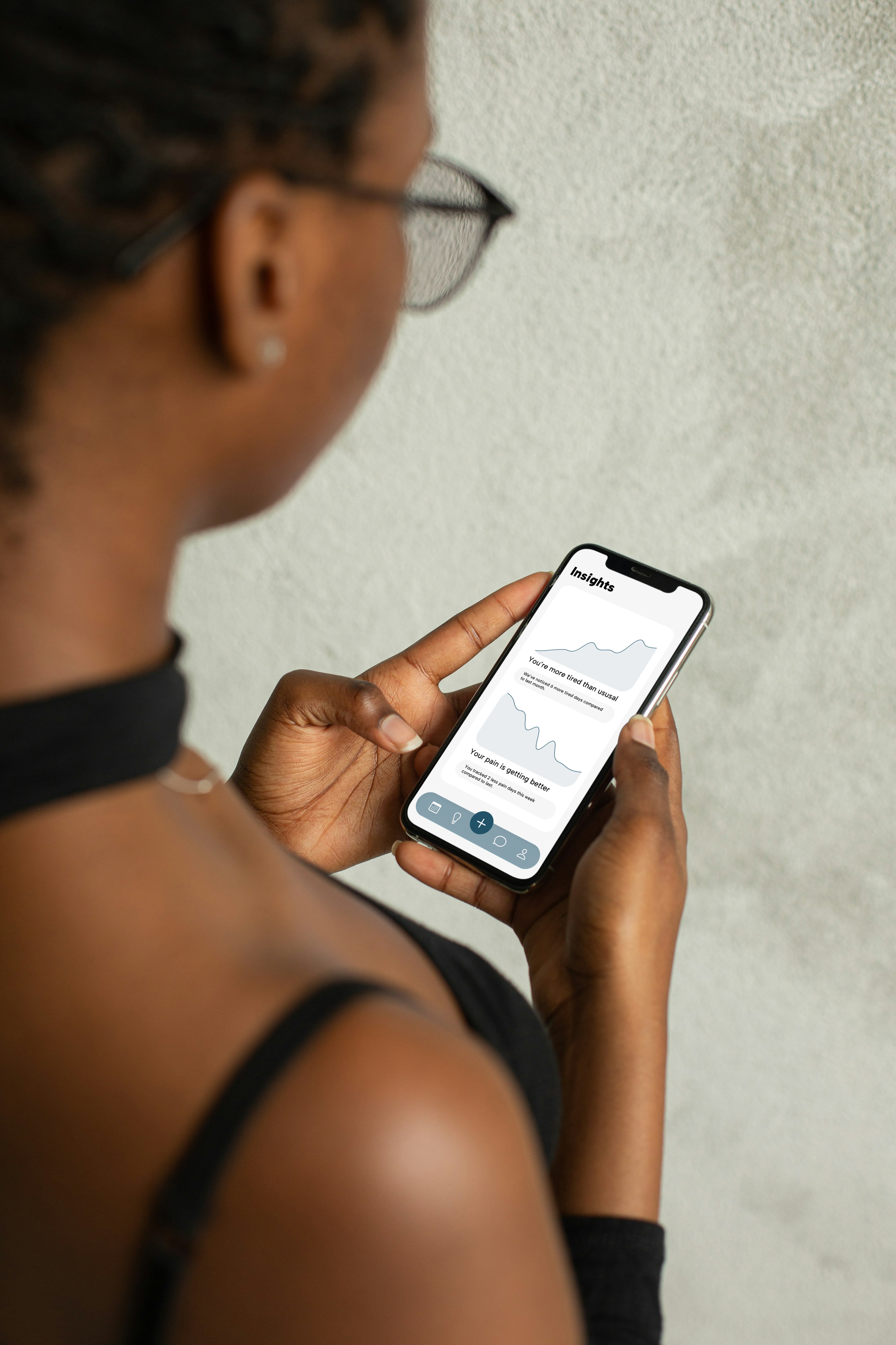
With the interaction model established, I developed Quiet Cycle into a cohesive visual system designed to make sensitive health tracking feel private, approachable, and easy to navigate. The final interface combines the functionality established through rapid AI prototyping with a visual language shaped by the needs uncovered through research.
Outcome
Quiet Cycle demonstrates how privacy-forward system design can support symptom awareness and emotional validation without requiring centralized data storage or predictive medical modeling.
Following the completion of a working prototype, the project met many of the requirements to qualify for testing within one of the chosen public discussion boards. Survey responses from 23 respondents reveled:
Respondents were 64% more likely to use the platform compared to current leaders in the symptom-tracking market.
Key Tradeoffs
Reduced analytical depth in favor of trust and safety
Slower pattern emergence to avoid emotional overwhelm
Limited social persistence to protect identity and anonymity
These tradeoffs were intentional and aligned with the system’s ethical commitments.
Reflection
This project shifted my understanding of digital health design from feature optimization toward responsibility-driven system boundaries. Designing Quiet Cycle required resisting conventional assumptions about scale, intelligence, and data aggregation in order to center user agency, consent, and emotional safety.