Aging In Place
Miller Knoll X Integrated Business and Engineering Honors Senior Capstone Project
Designing a lift-assist chair to support safe, independent sit-to-stand transitions in the home
15-week project | Role: Product Designer, Researcher, and Fabricator
Group Thesis Project in collaboration with 4 members of the Integrated Business and Engineering Honors Program at The Ohio State University.
People aging at home need physical assistance during sit-to-stand transitions, but existing lift chairs often trade usability and safety for aesthetics, or aesthetics for overly medicalized solutions. Poor control design, unstable armrests, slippery materials, and visually institutional forms can increase anxiety, misuse, or abandonment of assistive furniture altogether. The challenge was not only mechanical support, but trust, clarity, and integration into daily life.
How might a lift-assist chair support safe, intuitive sit-to-stand transitions while blending into the home and maintaining user dignity, independence, and emotional comfort?
Problem Framing
Context
While lift-assist chairs can reduce fall risk and physical strain, many existing products feel clinical, visually stigmatizing, or overly complex, leading to low adoption in private homes. Our project sought to design a lift-assist chair that prioritizes safety and physical support while integrating seamlessly into a domestic environment, preserving dignity, independence, and comfort for users aging in place.
Research Inputs
This project combined interviews with older adults and caregivers, consultation with mobility and biomedical experts, market analysis of existing lift chairs, and observational testing of sit-to-stand motion to understand safety risks, behavioral habits, and physical strain during daily use.
Design Requirements

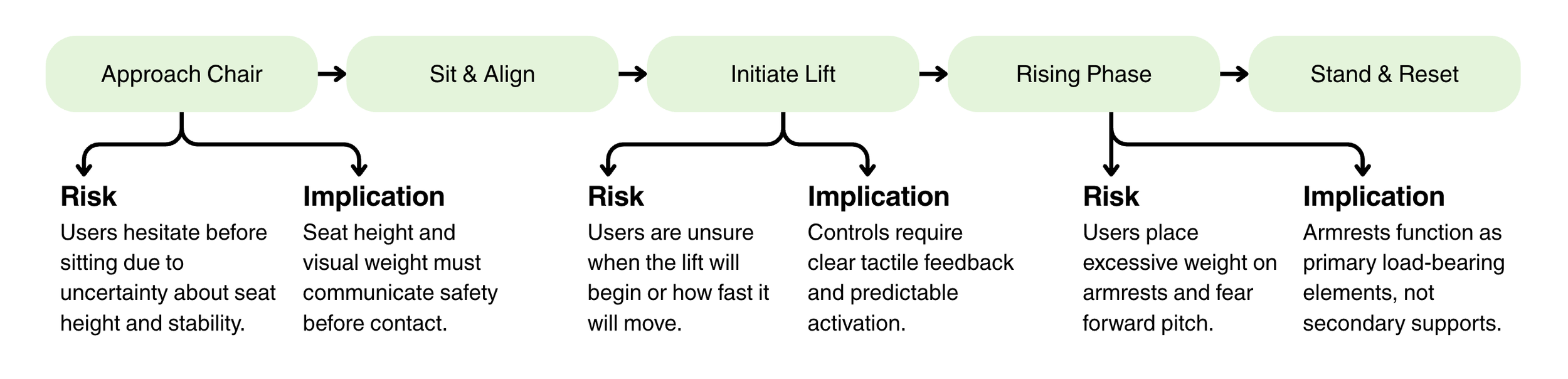
Sit-to-Stand Journey Map
Key Design Decisions
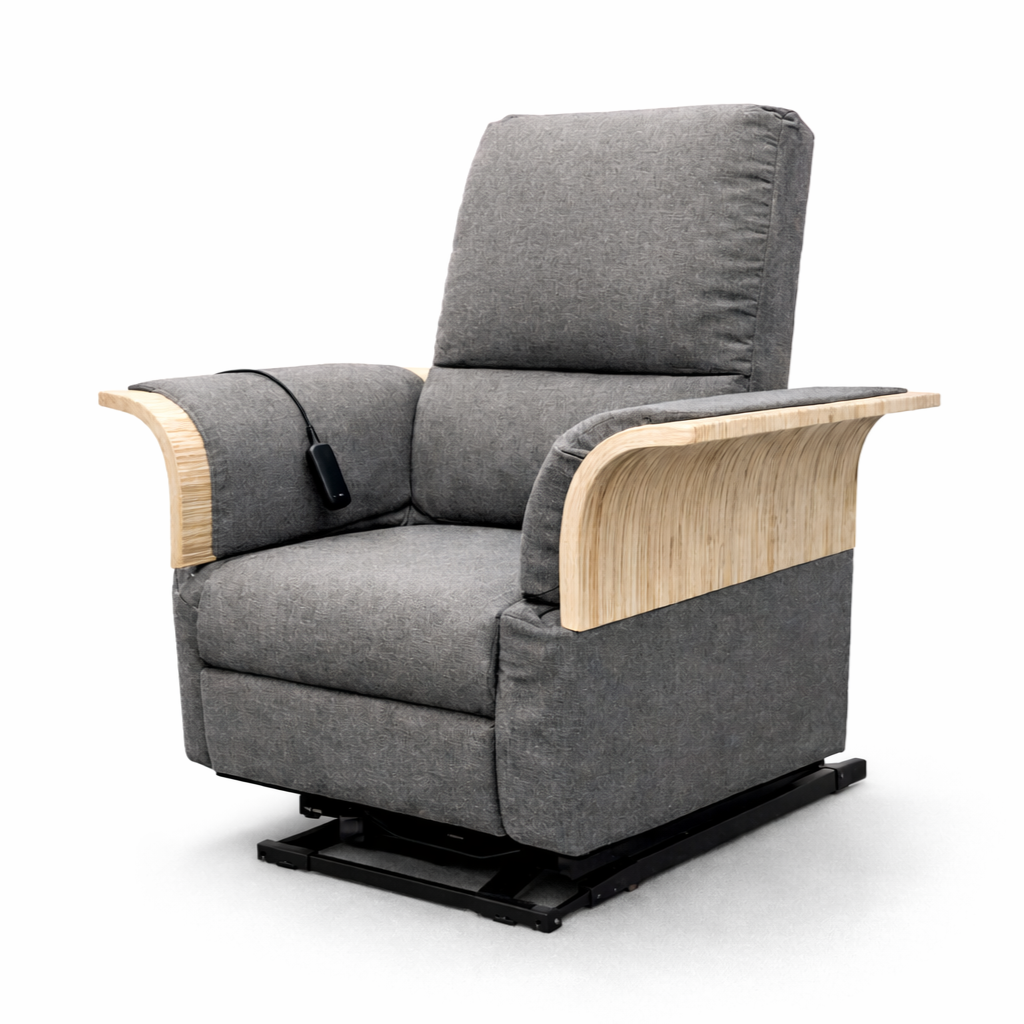
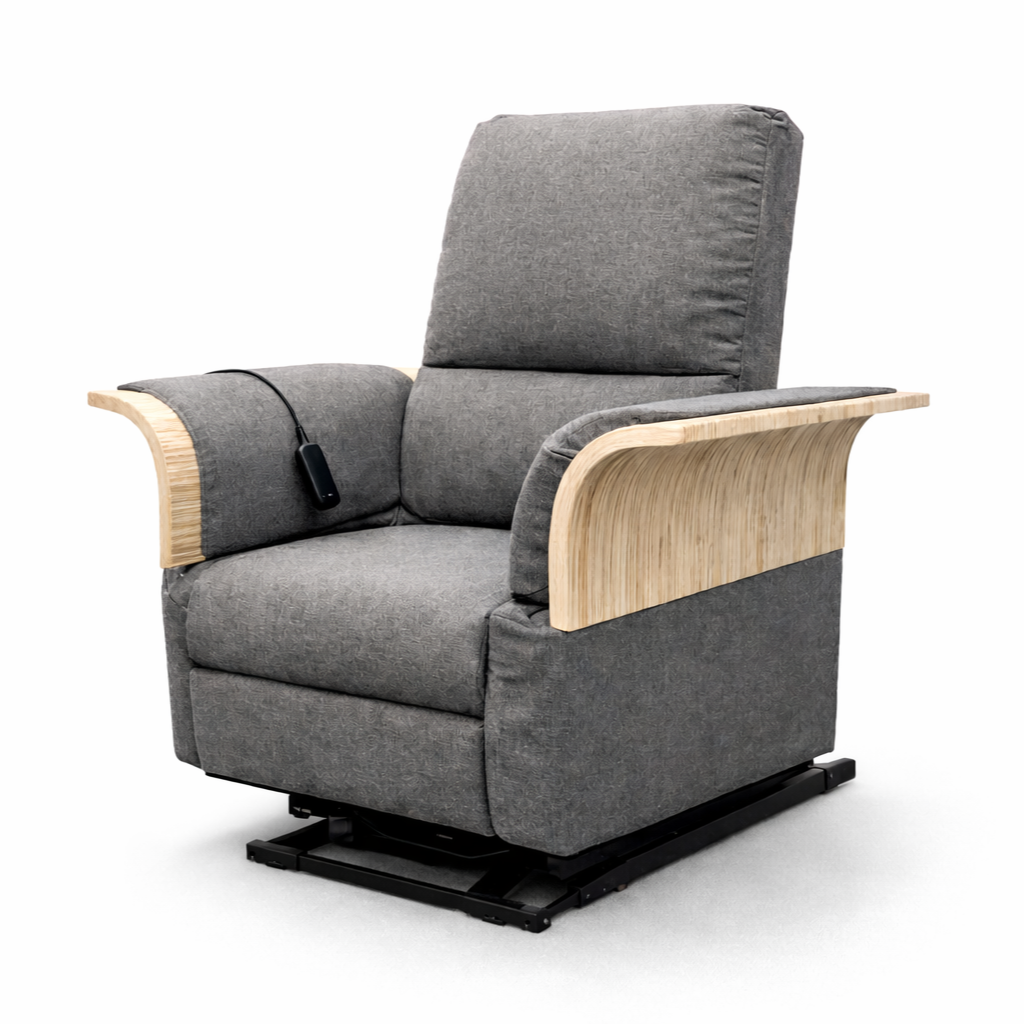
Armrests designed as primary load-bearing elements during transition
Lift motion optimized for gradual forward-to-vertical movement
Controls integrated within natural reach zones
Materials selected for warmth, grip, and domestic familiarity
Physical Prototype
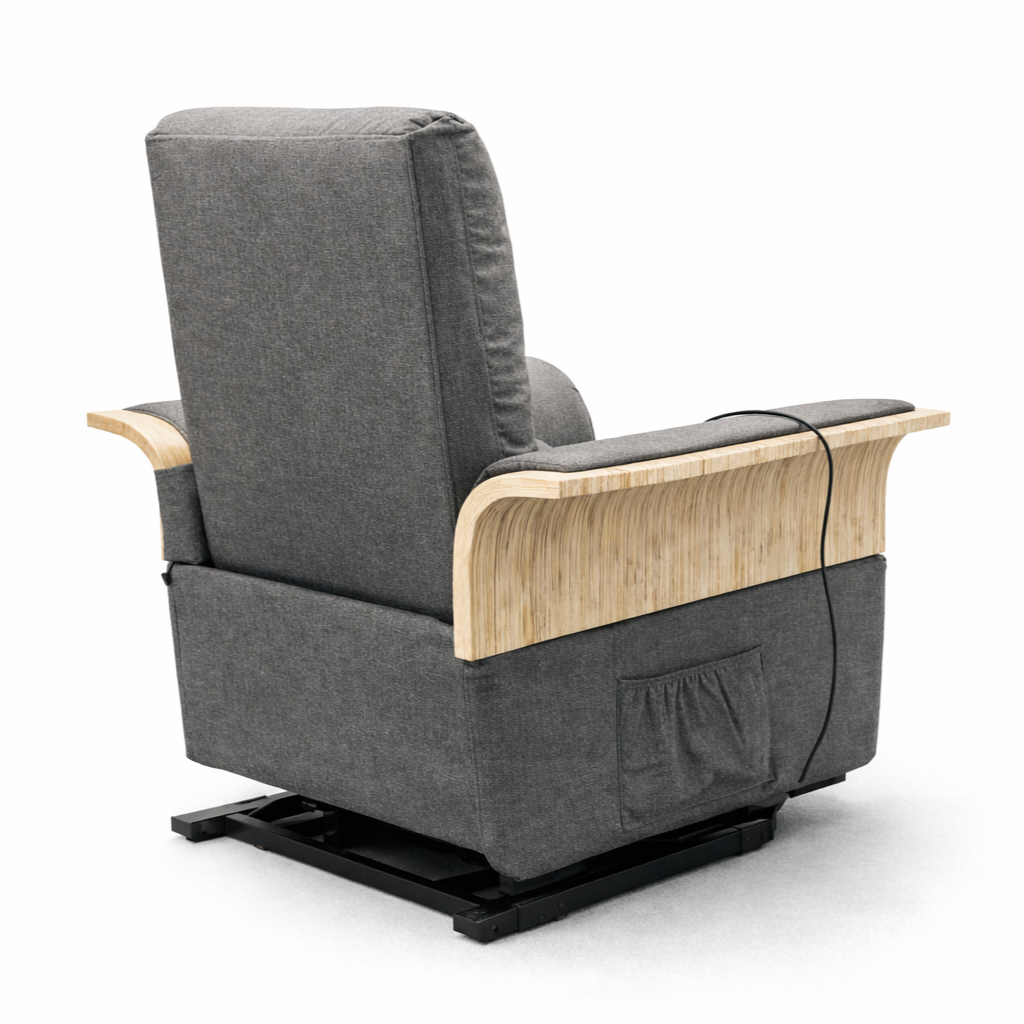
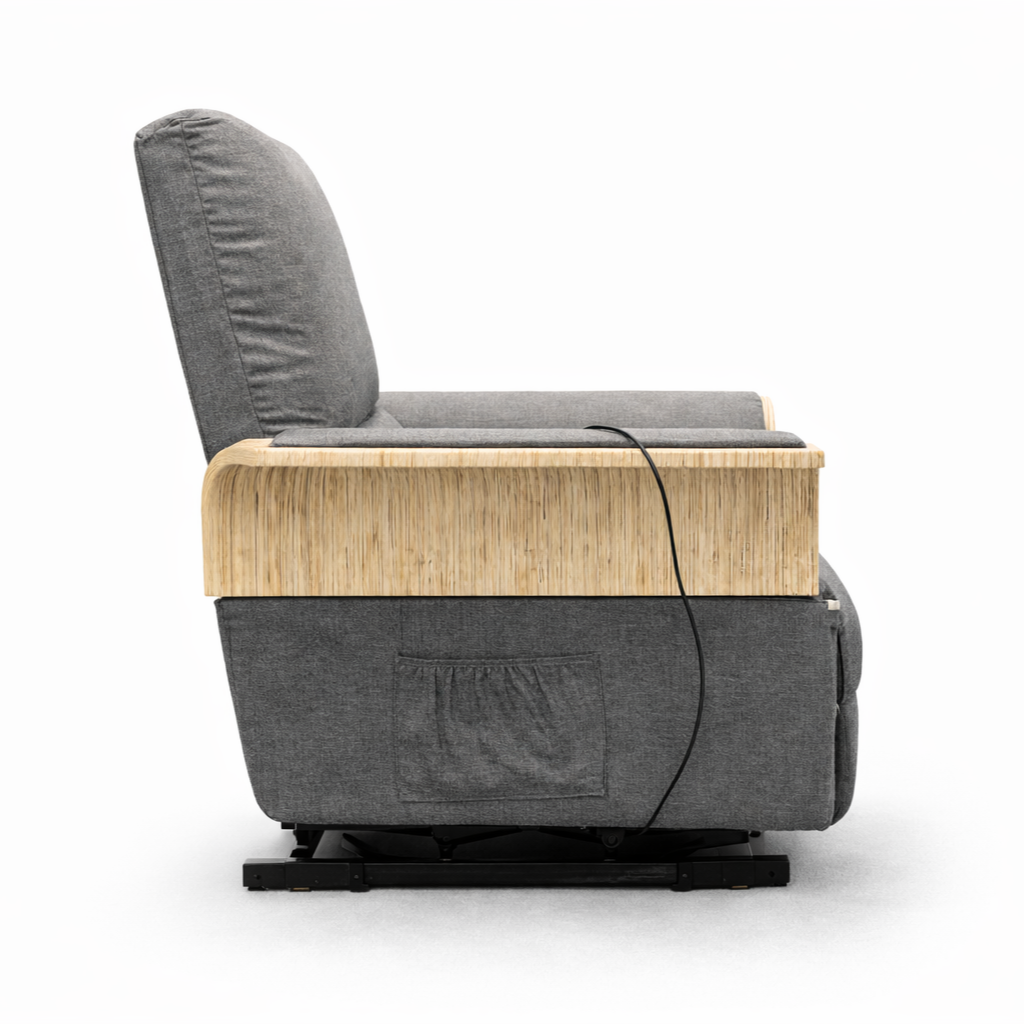
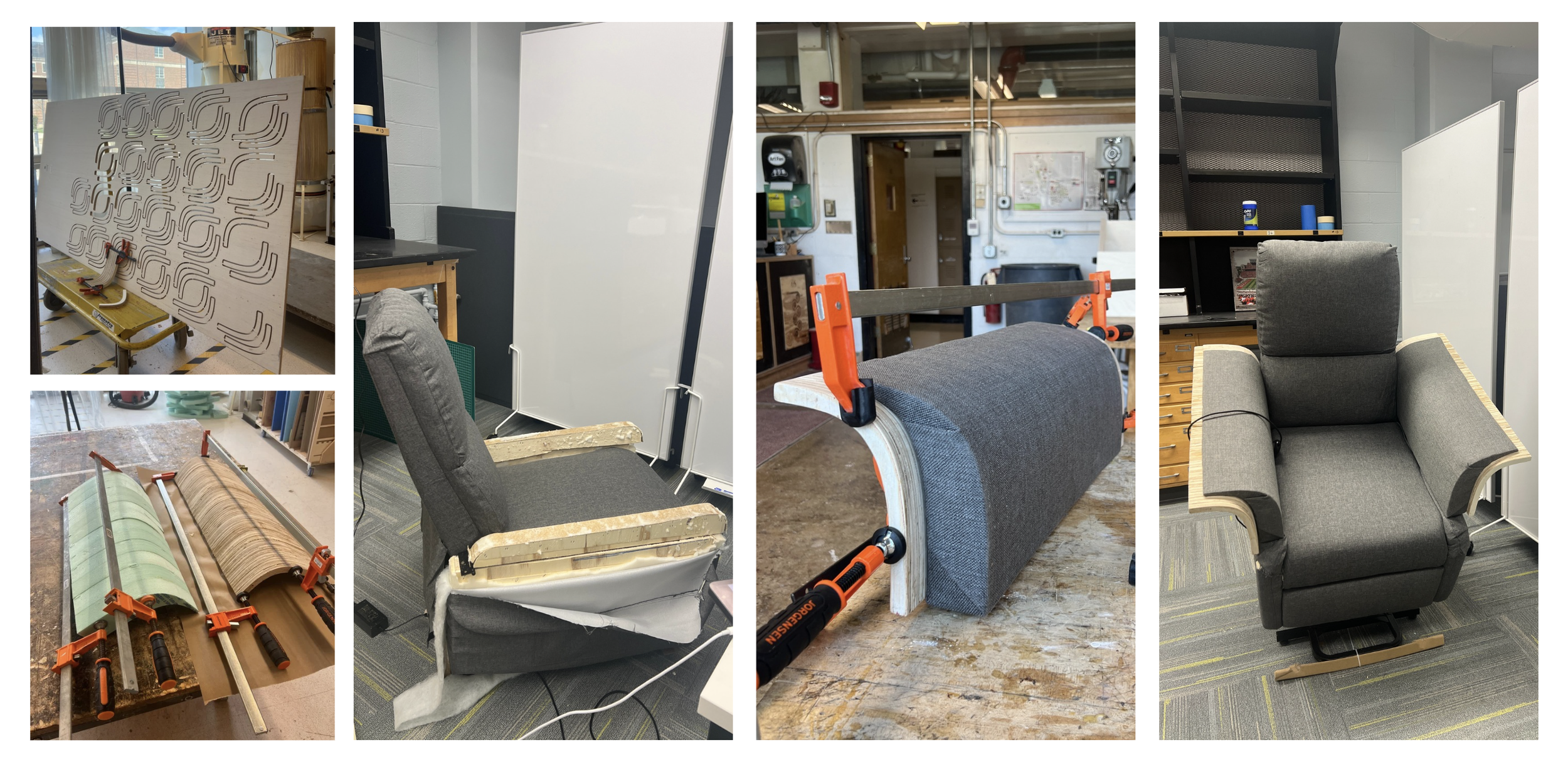
To validate ergonomics, stability, and user interaction, the team built a full-scale lift-assist prototype and tested it in real environments. This allowed evaluation of armrest geometry, seat height, lift trajectory, and user confidence during transition.
Process
This project involved modifying an existing powered lift chair to improve comfort and stability. I removed the original armrests and designed new ones using CNC-milled foam and plywood. The armrests were attached with hinges so they could be lifted for easy patient movement.
Outcome
The final concept balances mechanical assistance with dignity, allowing users to maintain independence without feeling medicalized. The chair supports safe daily movement while integrating naturally into the home environment.
Reflection
The final concept balances mechanical assistance with dignity, allowing users to maintain independence without feeling medicalized. The chair supports safe daily movement while integrating naturally into the home environment.